A big thanks to everyone who came out to our screenings this season. We are currently planning the Canadian Cult Revue Season IV. Check back mid summer for the new schedule. Thanks again for all the support!
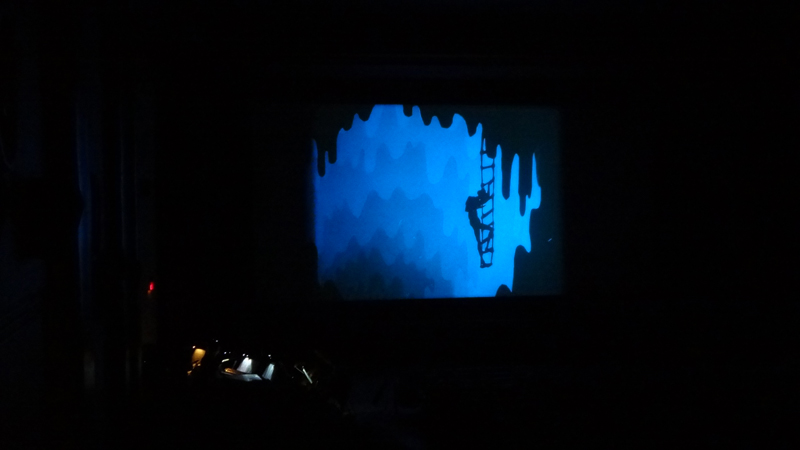
The Adventures Of Prince Achmed (1926), April 30th 9:05pm Bytowne Cinema
with Live Music. 35mm Tinted and Toned print.
The Adventures Of Prince Achmed is the oldest surviving feature-length animated film. We present it tonight from a restored 35mm film print, brought up for one night only from a distributor in the United States. The evening will feature a live musical performance of a new score composed by Ottawa’s own Mike Dubué (Hilotrons), who will perform it along with various guest musicians.
The musicians performing the score are:
Mike Dubue: Bass, Piano, Vibraphone
Holger Schoorl: Classical Guitar, Electric Guitar
Octavie Dostaler-Lalonde: Cello
Paul Hogan: Electric Guitar
Alex Moxon: Electric Guitar
Adam Sakailey: Effects, Piano
Rolf Klausener: Bass
Philip shaw Bova: Percussion
To make this all happen we are selling advance tickets and fundrasing to pay for the musicans, rental and original musical composition. Check out the campaign here which includes lots of great perks: http://igg.me/at/michaeldubue
Achmed is a tale of adventure and magic based on the legends of the 1001 Arabian Nights. The film was created over a three-year period by German director Lotte Reiniger, who animated the film using an innovative silhouette technique, photographing cardboard cut-outs and lead forms with a multi-plane camera. Though filmed in black and white, Reiniger also employed various coloured tints and tones to lend the film a more evocative atmosphere. The end result is a film of surprising depth and delicacy. Upon its release it was widely acclaimed as a masterpiece.
Reiniger was a highly accomplished animator, and a determined female pioneer in the film world. In her professional life she crossed paths with luminaries such as Bertholt Brecht, Fritz Lang, and Jean Renoir, as well as John Grierson, who later founded the National Film Board of Canada. He helped Reiniger and her husband flee to England to escape Nazi persecusion for her involvement in left-wing politics, where she lived and worked for many years, before coming to Canada in the early 1970s. Enticed out of a self-imposed retirement after the death of her husband, she completed two final short animated films at the NFB, and influenced a new generation of Canadian animators.
It may be a stretch to claim Reiniger as a Canadian filmmaker, but we’re willing to do it in the name of art.
Lost Films with Live Music by the HILOTRONS,March 28th, 7pm, Bytowne Cinema, Approx 70mins 35mm and DCP 2K
Collection of vintage & archival short films with brand new music performed and composed live by The Hilotrons.
The Canadian Cult Revue presents its second live music screening of the season with a selection of historically significant ‘lost films’ (well, nearly lost...) from the collection of Library and Archives Canada (LAC). Most of the films are silent shorts from the 1920’s, and will be projected from brand new 35mm prints created at LAC’s film conservation facilities in Gatineau.
To start off the evening, we’re showing a 1946 newsreel featuring many stories from the local area, including: a spectacular fire in Hull that destroyed the interprovincial bridge; the famous Dionne Quintuplets in Grade Five; Barbara Ann Scott at a skating championship; and, a spy ring uncovered by the RCMP. Then, local favourites the Hilotrons will play newly-composed soundtracks to our selection of silent short films with fascinating subjects such as: wireless telephony, preventing tooth decay, and graphite mining in Calabogie (seriously, they’re good!).
We will also be playing a reel from The Man From Glengarry (1922), also accompanied by The Hilotrons. The film, a spectacular silent feature shot in Ottawa in the early 1920s by director Henry Macrae, concerns a blood feud between the leaders of rival logging camps along the Ottawa River. This reel is one of only two that remain in existence.
Mike Dubue is a musican, composer and a member of the Ottawa-based band HILOTRONS.
Paul Gordon of the Lost Dominion Screening Collective interviewed Mike about composing music for silent films. Mike and the HILOTRONS will be playing live March 28th at the Bytowne Cinema as part of the Canadian Cult Revue film series.
Mike Dubue (right) conducting Night of the Living Dead LIVE.
Interview recorded (February 27th 2012)
PG: So Mike, you have been involved in scoring for films for a while now, but how did you get involved with scoring silent films?
MD: Well, it started with Metropolis and the 2009 opening of the Mayfair Theatre. It was sort of a hefty idea as it’s a really long film, but we said "Hey, let’s try this" and well, I became really addicted to scoring silent films.
PG: What was involved with scoring Metropolis considering it's over 2 hours long. It’s a well-known film, what did it take to pull it off?
MD: Well, the original score for Metropolis is brilliant so we didn’t really stray far away from it. However, it is arranged for an eighty piece Orchestra and we were a five-piece band. So we sort of broke it down but we had a lot to work with already, so really the job ahead of time was learning the material and doing a lot of rearranging and a slight bit of writing. Metropolis gave us a good scope of what the work is like to score a silent film. Whether we want to start from scratch and score it note for note or if we want to work with existing material.
PG: What were the instruments used for Metropolis and who were the musicians?
MD: Drums and percussion - Mike Essoudry. Paul Hogan played electric guitar. Linsey Wellman played bass clarinet, alto flute, flute, and alto sax. I played left-hand bass, right-hand organ, some synths, and bass.
PG: Since Metropolis you have scored a number of silent films including running a silent film festival. Can you name some of those films for us?
MD: Sure. So Metropolis,Nosferatu, The Rail Rodder, Cabinet of Dr. Caligari , Back to God’s Country, The Bear, Boy and Dog, Carry on Sergeant! (1928), Man from Glengarry, Tim’s Tiny Tooth, Wireless Telephony, Graphite Mining in Calabogie and Night of the Living Dead.
PG: Tell me a bit about Night of the Living Dead, that’s a bit of a different one because it’s not a silent film.
MD: The idea was to work with films in the public domain that weren’t silent but turn them into silent films in the sense of turning off the sound and then recreating the full sound design live. So I’d have voice actors on microphones in sync with actors on screen, then foley artists in sync doing all the sound effects with the film. Then I had a small chamber group orchestra of five strings, bass clarinet, guitar, prepared piano, vibes, and flute. It was all performed live to the film.
PG: Night of the Living Dead was one of your most successful shows including the shows at Bluesfest.
MD: That’s right, we did three shows at the Mayfair and two at Bluesfest.
PG: Are you ever going to do it again?
MD: Yep, when we can afford to do it. (Laughs)
PG: Ok what has been your favorite film to score so far?
MD: Well, Night of the Living Dead - it’s a tossup of three for three different reasons.
The Night of the Living Dead was really interesting because I directed a lot of how it actually worked live...I transcribed the whole script and created one of the first post-production scripts for the film because there was none in existence for whatever reason. Then I got to make a real Foley score, the way you would score Foley for something like an animated cartoon, like Looney Tunes. So that was kind of exciting...I got to work with the original music that George Romero had used but because it was all public domain I got to rearrange a bunch of ideas because the music editing in that film has always been kinda choppy. So I got to work with existing music but also rearrange, recompose. It was kind of fun to amalgamate it all together.
Then Cagliari is my favorite because I got to score it note for note. Then Back to God’s Country - it’s an original score but I kind of used lots of different music that would have been played or existed in Canada at the time, whether it be Canadian folk music, Acadian music, different Klezmer music.
PG: So right now you’re doing a mini tour with the HILOTRONS of Caligari plus four Canadian short films. How’s that going, and what’s involved with that?
MD: So far it’s going alright. We're trying to strategically book it for time and cost efficiency for the band on the road, because it’s a trying production to bring on the road. Trying might be the wrong word as we are enjoying it, there’s nothing trying about it - but it’s a lot of rehearsing to get it to the point where it is. It’s hard to treat the shows just like band shows so we are being selective of where we are playing. Then with the material itself it’s fun because with the four films as a band we are able to split the composing duties to everybody, we are all able to write for the films. So that’s a nice opportunity for the band.
PG: Speaking about the band, the HILOTRONS are pretty much a rock band, so what do they think about playing and composing for silent films?
MD: Well, the cool thing about this situation is that a lot of us come from and have somewhat of a background with scoring for cinema or live theatre, or dance. So we were able to utilize that experience in working with visual imagery. The band is good at wearing two hats, the hat of being a pop band playing on stage in rock concert format or we can work with a film, sort of like a chamber ensemble.
PG: Any major future plans?
MD: Well - as much work as I can do with the silent films. As much as I’m a musician, I’m also a real big film buff. A lot of what I’m trying to do with the silent films isn’t really necessarily about the music. The music is only there to kind of heighten the films and bring some attention to the actual picture. For me it’s all about the cinema and about people seeing the stuff because otherwise they might not see it without this opportunity. It’s exciting for the people to watch, especially the Canadian stuff that we are working with.
PG: Do you think silent films are having a bit of a renaissance? With The Artist winning Best Picture and Hugo.
MD: Yes, absolutely. Here is the interesting thing about the silent era: it is what it is and when talkies came out cinema became a different art form. Needless to say the silent era was pretty much completely squashed just because industry standards had changed, which is fine because we have had amazing cinema since then, but the art of the way silent films were made was kind of left unexplored. 30 years of the silent era is really not a long time for any art form so hopfully the renaissance that you mention maybe has a lot to do with people wanting to re-explore the idea an see what we can do with it now.
PG: Cool. Thanks for the talk and I’m looking forward to the at the Bytowne Cinema in Ottawa, March 28th, 2012.
Carry On, Sergeant, 1928, 35mm, 98mins, 7pm, Bytowne Cinema, Nov 9th
Accompanied by LIVE MUSIC from Mike Dubue and Mike Essoudry!
Carry On, Sergeant! was shot at Trenton Studios in Ontario and in the surrounding countryside by British Director Bruce Bairnsfather, with legendary Canadian filmmaker Gordon Sparling working as his assistant director. With a budget of $500,000, it was the biggest-budget film produced in Canada up to that time. Much of that budget went to recreating WWI-era France, with sprawling sets and battlefield scenes featuring hundreds of extras.
The story follows a group of workers from Hamilton who join the army to fight in WWI, and the travails and temptations that befall them during the war. The film has excellent production values and presents a drama that may feel surprisingly modern to today’s audiences. Bairnsfather’s insistence on portraying the soldiers as flawed human beings resulted in some criticism from those who expected a straightforward glorification of Canada’s war effort.
Produced as a silent film just as theatres were transitioning to sound, it had only a brief run at the box office before it was removed from circulation in January 1929. It fell into obscurity for many years before Gordon Sparling donated a print to Library and Archives Canada, resulting in a complete restoration of the film. That restored print is the same one we will be showing with a brand-new live soundtrack composed by Ottawa’s own Mike Dubue (Hilotrons). Similar screenings of other silent films that have been held around town in the past couple of years have sold out quickly, so please make sure to show up early to ensure a seat.”
Follow this link to read a fascinating monograph on the restoration of Back to God's Country by film archivist D.J. Turner from Library and Archives Canada (it's a large file so please give it time to load). Turner recounts the great technical challenges as well as the strokes of luck that went into saving this important part of Canada's cinema heritage. We will be showing this same restored print on June 25th at 9pm with live music by HILOTRONS founder/composer Mike Dubue. Very few Canadian feature films from the early days of cinema still exist, and the restoration of Back to God's Country is a case to cheer. Not only did Turner restore a piece of Canadian cinema history, he also helped bring attention to the pioneering career of Nell Shipman. She was a true trailblazer - writing, producing and starring in the film. As with many of her roles, she portrays a heroine fighting to survive against impossible odds in the wilderness. It features a dastardly villain, wild animals, rugged landscapes, a husband in need of rescue, and a bonus nude scene from Shipman who knew how to entice an audience into the theatre. This film became her greatest success, and cemented her reputation as a maverick filmmaker. Modern audiences may be shocked at just how "modern" this silent film is...don't miss it!
One of the oldest surviving Canadian feature films - Back to Gods's Country (1919), written and produced by star Nell Shipman - will be playing at the Mayfair Theatre, June 25th at 9pm with live music by HILOTRONS member and Mayfair Orchestra leader Mike Dubué. The 35mm tinted print is coming from the Library and Archives Canada. Don't miss this unique event! $10.00 for Mayfair Members, Students and Seniors.